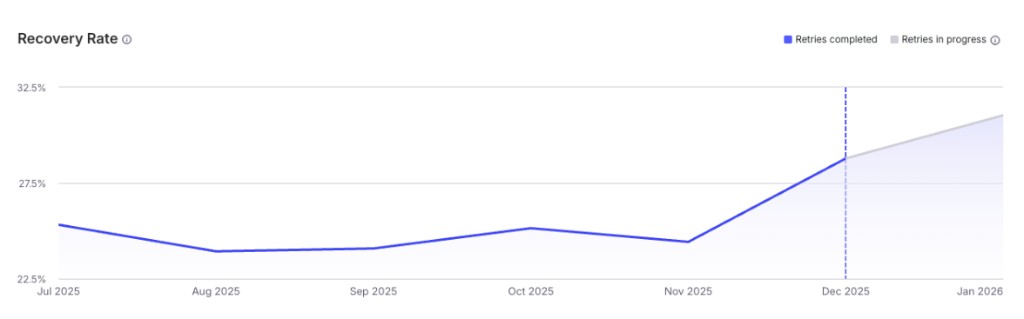
Bonafide more than doubled recovery, from ~24% to ~55%
Bonafide (hellobonafide.com) moved its failed-payment recovery off ChurnBuster and onto MaxLTV in mid-December 2025. Recovery moved within the first 30 days and has kept climbing. No new hires and no complicated migration.
The leak
Bonafide sells women's health products on subscription. Like most subscription brands, it treated failed payments as a cost of doing business: a dunning tool sent its emails, retried the card, and whatever didn't come back was written off.
On ChurnBuster, that meant recovering about 24% of failed payments. Three out of four subscribers whose card failed were lost, along with every order they would have placed after it.
What changed
- AI-powered retry timing. Retries are scheduled for when each card is most likely to clear, instead of on a fixed calendar.
- Dunning that lands somewhere. Payment-update links open a seamless card-update flow in the store, not a generic form.
- Recovery on-site, not just in the inbox. Subscribers who are already logged in see banners and account-page prompts to fix their payment method.
- No complicated migration. The switch off ChurnBuster happened in mid-December 2025 without rebuilding the subscription setup.

Recovery rate, before and after the switch
Share of failed subscription payments recovered, by month. Recovery sat around 24% on ChurnBuster, moved within the first 30 days after cutover to MaxLTV, and has climbed to roughly 55%.
What 31 points is worth
Recovery rate sounds like a small operational metric. Put it in subscribers and it isn't.
Across Bonafide's subscriber base, that adds up to a $2M annual LTV impact.
Catching churn before the card fails
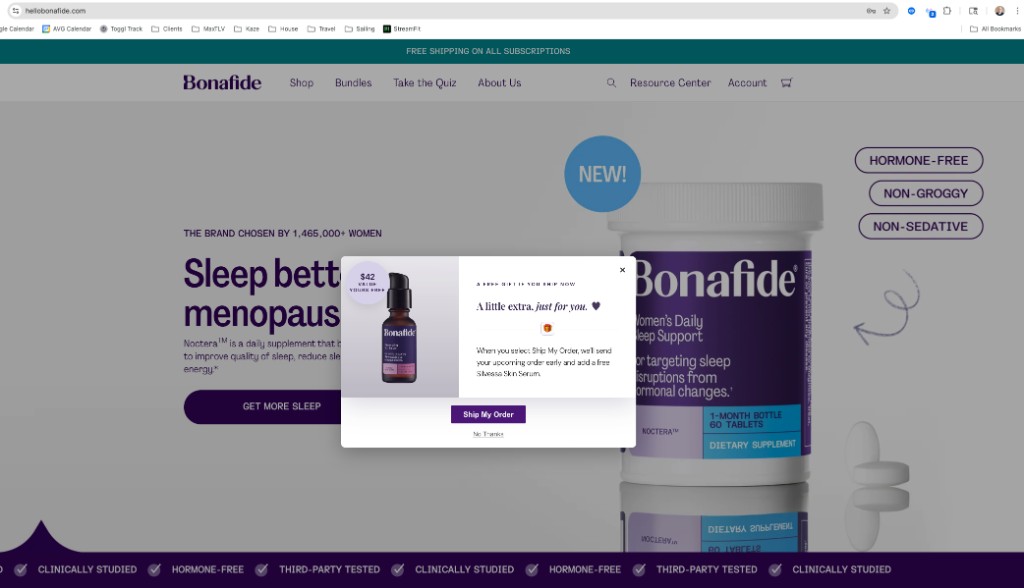
Recovery is the last line of defense. MaxLTV also scores subscribers for churn risk and intervenes before a payment ever fails, with personalized on-site offers like shipping the next order early with a free gift.
In their words
"Recovery improved immediately after the switch to MaxLTV. No new hires, no campaign overload, no complicated migrations, just smarter logic and a better experience for subscribers."
"MaxLTV is a great tool for churn prevention that is highly customizable to brand's specific needs!"